
Wall hangings look delightful in all interior spaces,
especially when arranged asymmetrically.
Are your indoor walls devoid of wall hangings or other wall decor that can complement your interiors? Are you planning to add style to your walls using framed art, but don’t know how to, or where to start? If your answer is yes and yes, this article is for you.
We all have artworks, pictures, illustrations, photographs, hand drawings and doodle art stored somewhere within our homes. But many of us don’t realise we can turn these stashed-away possessions into interior décor elements that will stylishly uplift our interior spaces.
There is so much you can do with these hidden treasures. You can frame and hang them in many beautiful ways, and there are many hanging methods to achieve this. The good thing is that there are no hard and fast rules about how you wish to arrange them on your interior walls.
7 Tips for Hanging Wall Art
There are many creative ways of hanging artwork and framed pictures on your interior walls. While wall art must look organised whichever way they are arranged on a wall, there is no hard and fast rule as to how it should be laid out.
Interior designers and home decorators can usually tell the types of artwork that go well with the themes of their interior projects and are quite adept at arranging art in aesthetically pleasing and effective manners.
But you can, too, because there are no rules cast in stone on how to hang art. There are a few basic principles that represent what is desirable to different people, however.
So, what are the best or most creative ways to hang art or framed pictures? The answer is that it depends on:
- Size of the wall.
- Shape of the wall.
- Wall height.
- The wall position.
- Available wall space.
- A backdrop or a feature wall.
- Colours/style/size of picture frames
Size of the wall:
Your wall size will determine how you hang wall art. If you have a narrow wall with a low ceiling, for instance, you don’t want to hang an overtly large painting that swallows up the wall.
Shape of the wall:
If you have a triangular wall (typical wall shape found in A-frame homes) or a square wall, you will hang artwork differently on the two walls.
Wall height:
For interiors with high ceilings, for instance, you want to hang paintings that are proportionally balanced with the wall’s character. You don’t want to install a couple of small framed artworks that will visually disappear on high walls, nor do you want to hang oversized wall art on low walls.
Wall position:
Awkwardly positioned walls can be a bit tricky. The best way to decorate such walls, for instance, the walls of a niche, is to go the gallery arrangement way. You can extend the gallery of small framed pictures into the corners to help the stark lines of the niche appear to disappear.
Available wall space:
How much wall space is available for hanging your artwork? If, for instance, you live in a tiny apartment and can’t seem to find space for your art, hang your art as a column of art that spans from below eye level to above eye level, about 2ft away from the ceiling. Ensure they are the same small-sized framed works.
Backdrop or a feature wall:
If you don’t have a feature wall, you can create one with wall art. Depending on the size of the wall, you can go for a one-piece framed art, a standalone tapestry, or a series of artworks like a collage of art or a collection of framed black and white or sepia photographs.
Colours/style/size of picture frames:
Picture frames come in all conceivable colours, different styles and sizes. Depending on the design theme and the interior colour scheme, you can base your choice of frame style on anything that ranges from vintage-inspired to modern picture frames constructed from man-made materials.
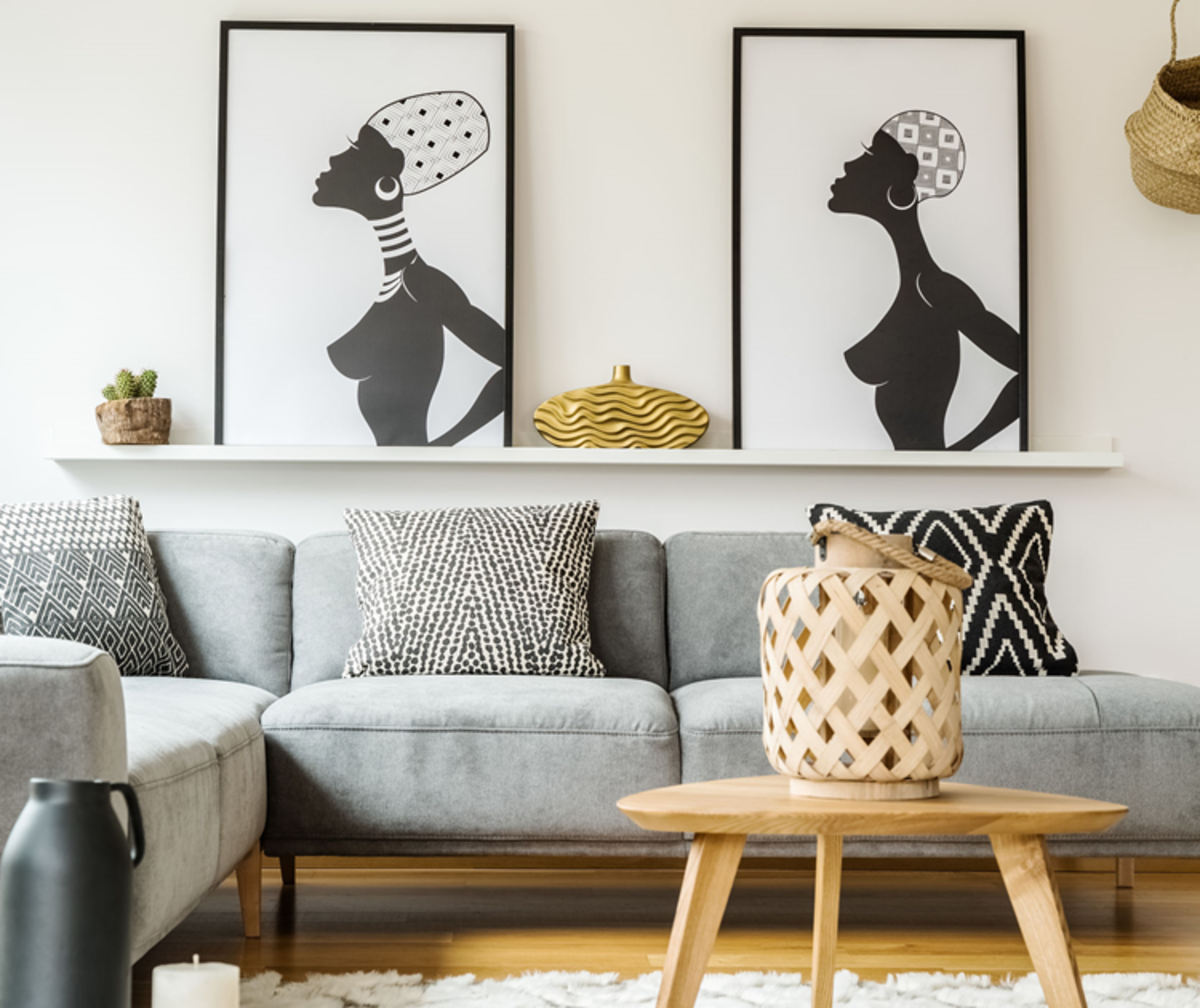
Dramatic display of large-sized framed wall art with tribal illustration.
(Images used under license from 123rf.com)
Picture Hanging Ideas
Symmetrical vs. Asymmetrical Arrangement
But you can also go for an asymmetrical arrangement if you want something unique and different from the norm. An asymmetrical arrangement includes using different sizes, styles, and colours of picture frames, all arranged haphazardly on a wall.
For wall art to stand out conspicuously within the room's decor, it's best to have plain, neutral wall colours. If you must have striking, vibrant colours, let them be a part of the artwork.
It is best to relate the subject matter of the artwork to the character and theme of the room.
Create colour accents on one wall with framed paintings or photographs. Use different colour frames for each picture. This can be a feature wall that is set in harmony with the general interior design.
For a modern cluster arrangement, artwork must not be arranged indiscriminately, but rather, in the form of simple geometric patterns:
- Triangle
- Square
- Line
- Rectangle
- Diamond
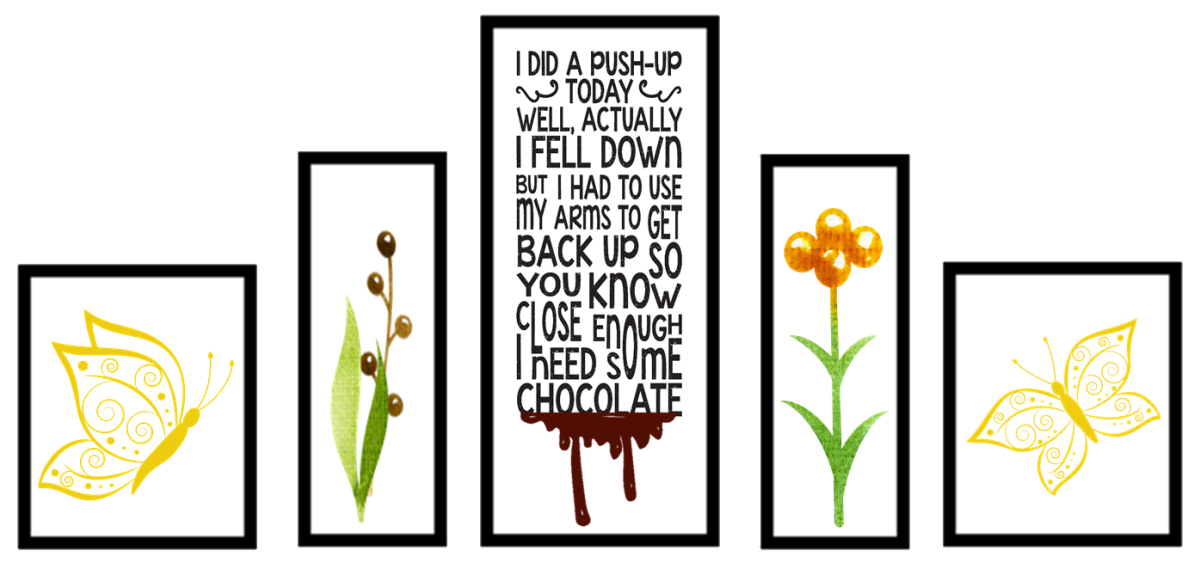
TRIANGLE
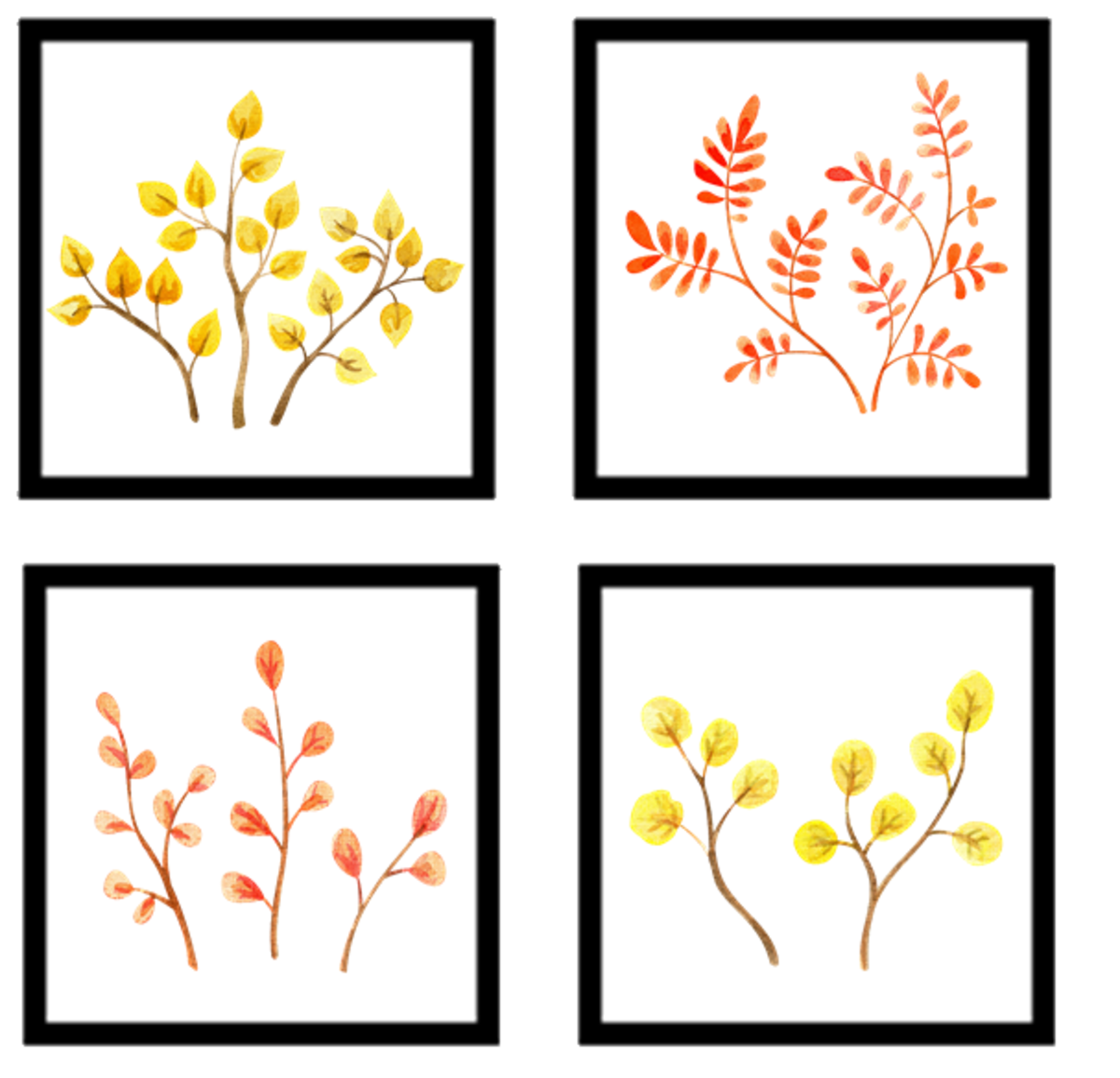
SQUARE
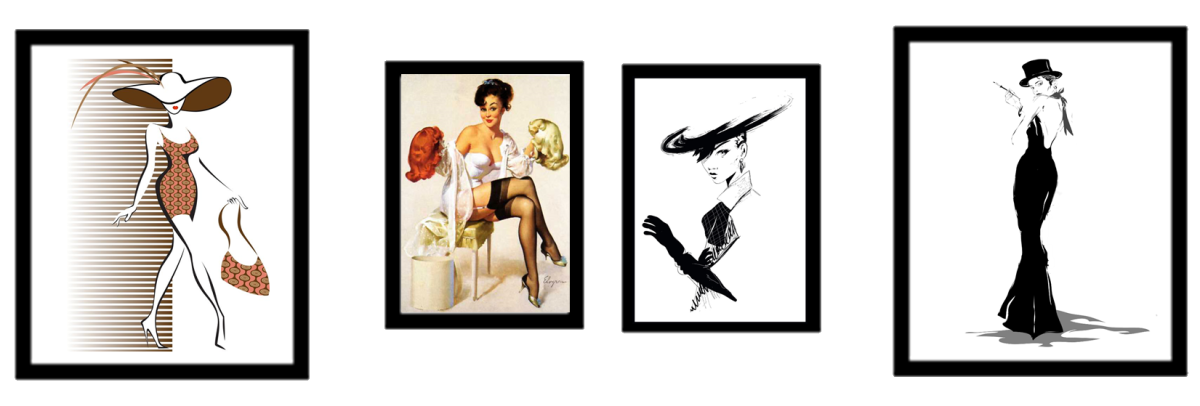
LINE
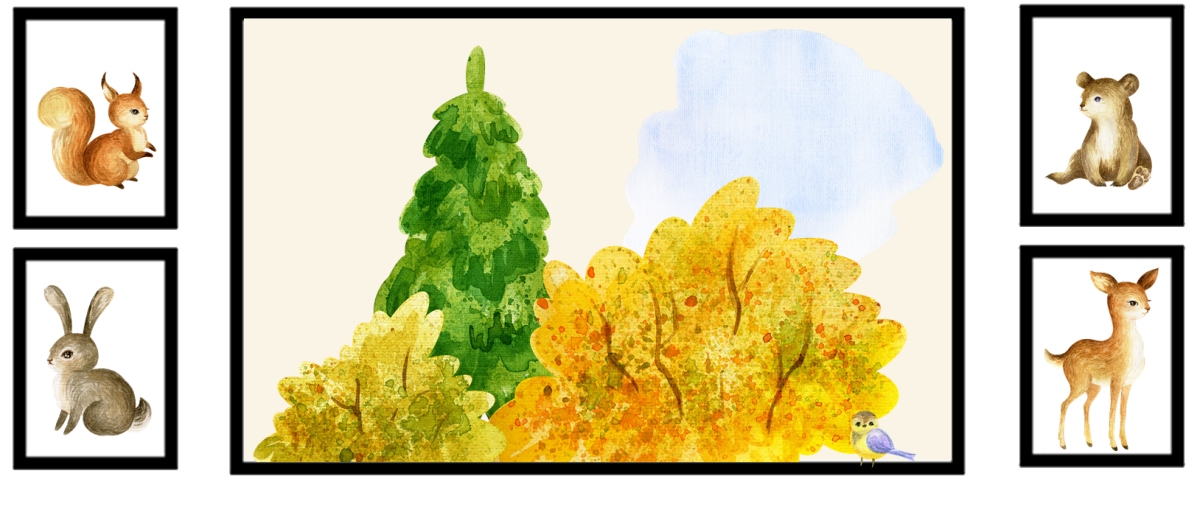
RECTANGULAR
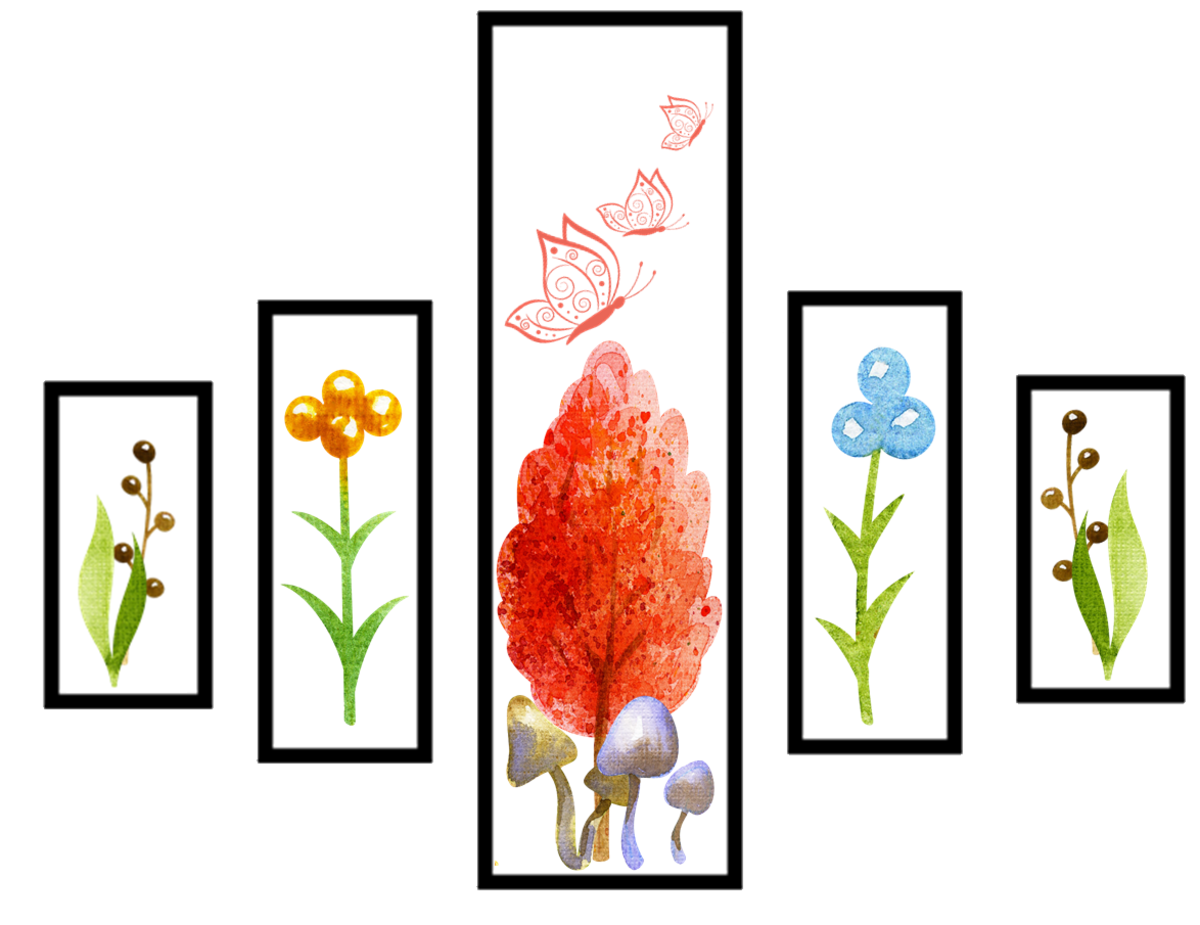
DIAMOND
Other Artwork-Hanging Considerations
For different themes, shapes and sizes of art hung on one wall (posters, pictures, photographs, wall art), set them close in a mass arrangement. This makes the entire wall look like a beautiful scenic view.
Hang one large painting on the most significant wall in a room. At times, interior walls with too many wall hangings can be stressful and heavy on the eyes, especially if they have ornate frames.
If you have rooms with heavily decorated walls like scenic images, patterned wallpaper, special paint effects, murals, etc., do not hang framed art in them, because the paintings will end up being lost in the busy background.
Tip:
- Pictures and framed artworks can be hung on wall surfaces using hooks, nails or screws driven well into the wall. They must be fixed near the top of the picture frame. This ensures that the picture is hung as flat as possible against the wall surface.
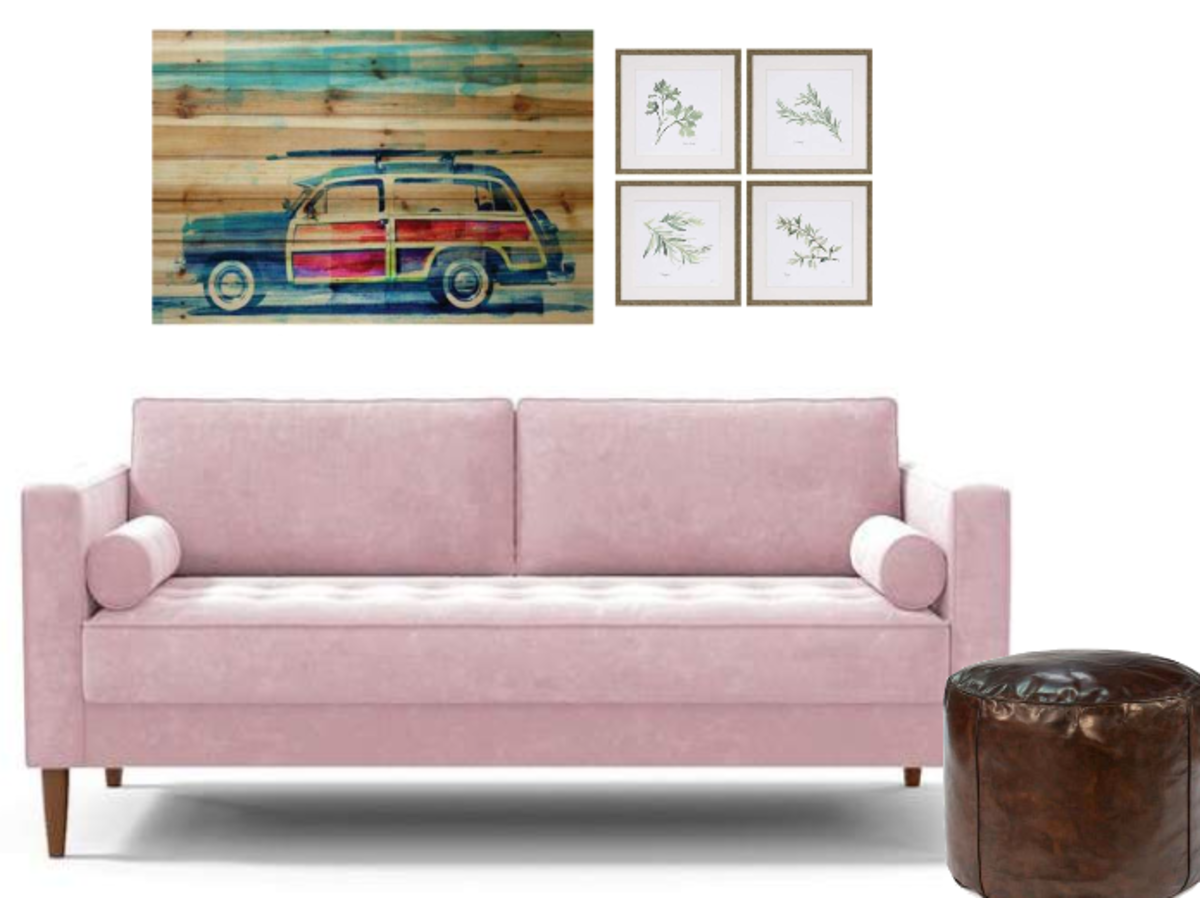
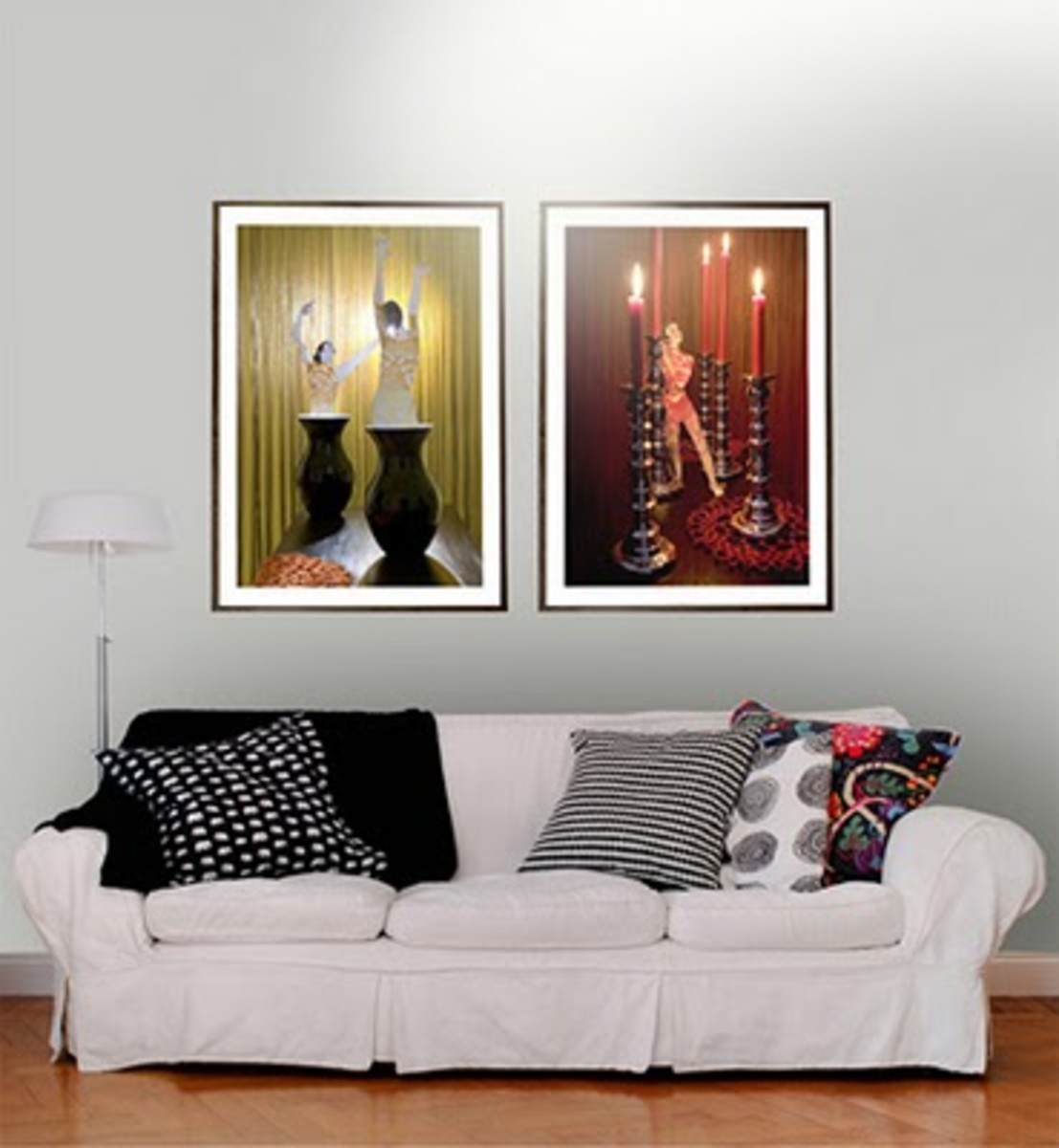
This picture hanging idea has a symmetrical arrangement.
It works as the sofa's backdrop. A simple, eye-catching arrangement
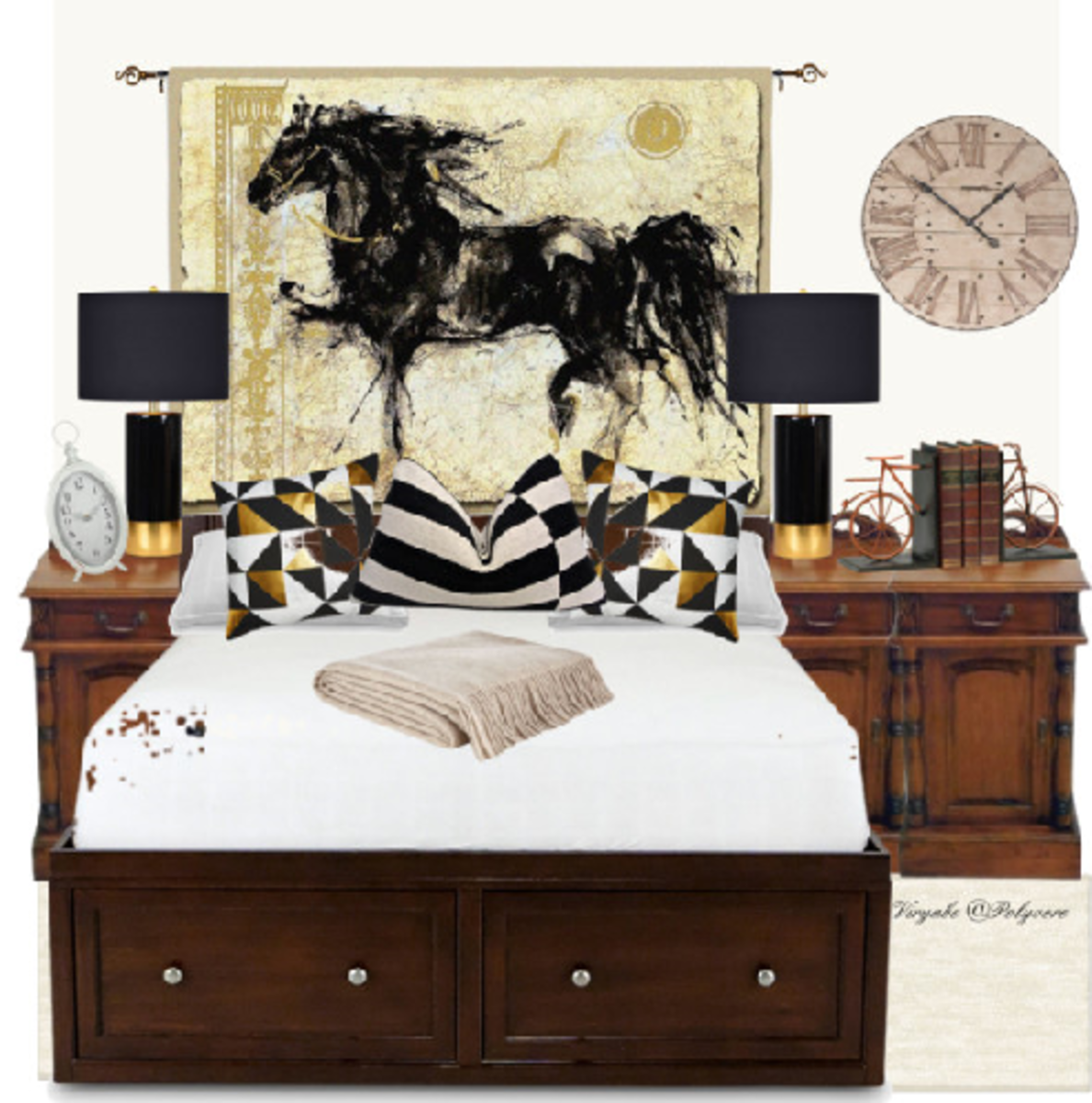
A creative way to hang a standalone tapestry art.
It serves as a piece of decoration, a one-piece wall art.
Do's and Don'ts of Artwork and Picture Hanging
Do's
- Groups of three pictures could either be hung with the largest in the centre or two of the same size on both sides of the third. It is good if the three artworks are related in character and colour scheme.
- Small pictures look better when hung at eye level.
- Larger paintings that will be viewed from a distance are best hung at a higher level.
- A group of artworks arranged asymmetrically can be placed on wall surfaces that are not the central point of the room.
- Make sure that hanging artwork ropes or wires do not show when paintings are hung on the walls. It looks so tacky when hanging elements become obvious.
Don'ts
- Do not hang oil paintings and watercolour paintings near each other. It will become unharmonious unless they are similar in colour tones.
- Hanging artwork with vibrant colours next to black-and-white sketches is inappropriate. They must not be placed close together on the same wall to avoid a situation that's odd and inconsistent with picture-hanging styles.
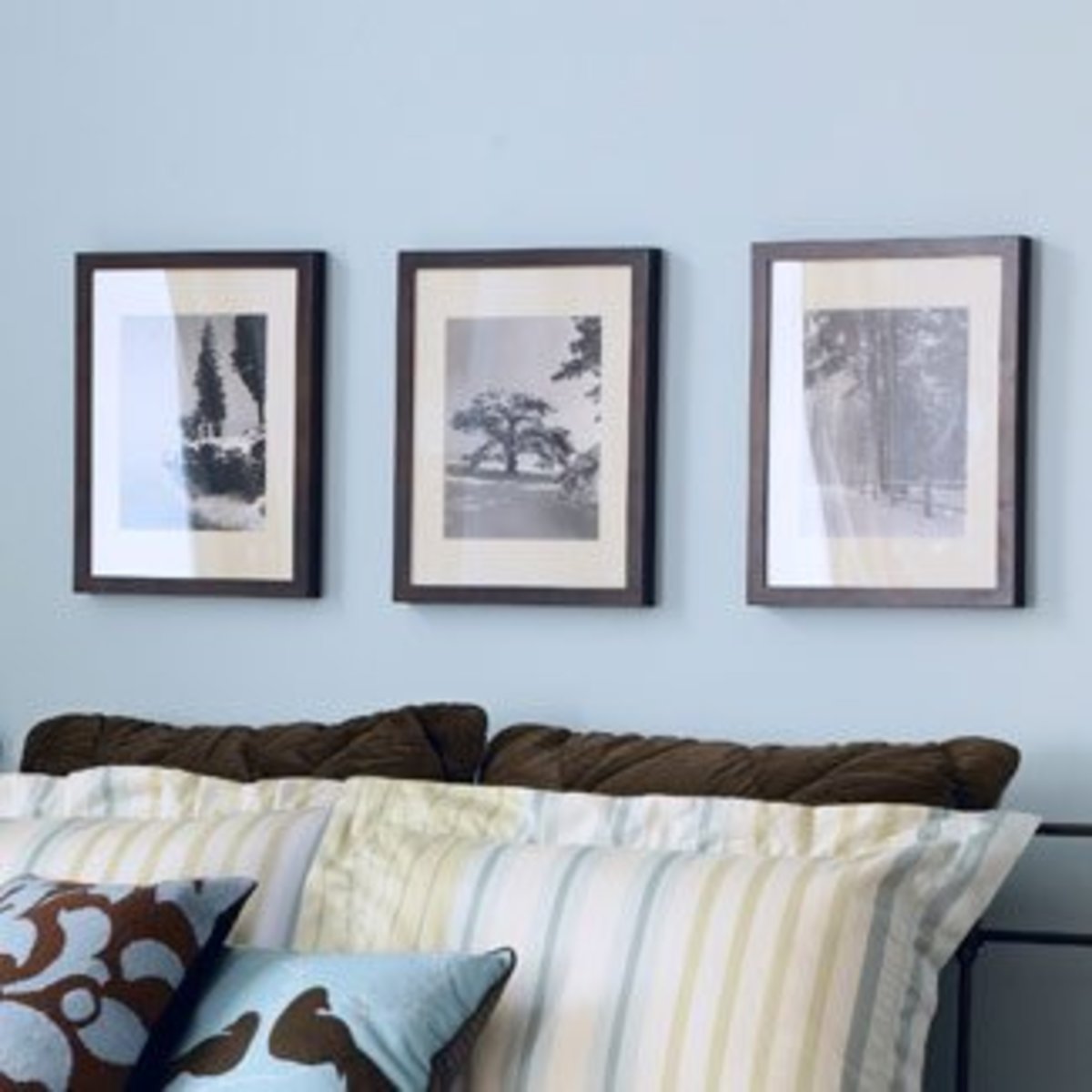
A simple picture hanging idea using three framed pictures/paintings,
all set out in a straight line.
Related article
No comments:
Post a Comment
Note: Only a member of this blog may post a comment.