
We have all heard time and time again that the kitchen is the heart of the home. But does this still apply today? Do we still congregate in the kitchen, helping to make dinner? Do we spend this precious time chit-chatting about our daily affairs? Perhaps, perhaps not. Times may be different, but family units still remain the same.

We can re-capture those precious moments. If there is a will to achieve something, there will be a way to do it. If your kitchen looks fresh, warm, and inviting, everyone will want to hang around it. On the contrary, if the space is not-so-great, drab, and plain, you need to infuse some cheerfulness and style into it. And you do not require a high kitchen upgrade budget to achieve this. There are ways you give your kitchen a facelift for a lot less than you can envisage. While some upgrades will cost you nothing except elbow grease, others will cost you no more than a few hundred dollars.
De-clutter
Make sure you do not crowd your countertop with stuff that should be kept away in designated storage spaces. There is nothing as unpleasant as a surface littered with cereal boxes, jam jars, cutting boards, bottles, plastic containers and fill-in family recipe books. These can be stored in wall-mounted racks, floating shelves, and decorative storage baskets. Some will also find their space in kitchen cabinet compartments, pull-out spice racks, pigeon-holed drawers, or the pantry if you have one.
Clean and De-Grime
Put the sparkle back on your kitchen countertops. Give them an in-depth clean and de-grim process. A beautiful shiny surface is so inviting. Everyone will feel "the clean".
There is no universal method for putting the shine back on your countertops. All you need are the general cleaning techniques stipulated for whatever material you have. Wood, marble, granite, laminate, or slate. How to clean each material differs. However, most require just soapy water or an ammonia-based cleaner like SoftScrub. If you desire a polished shine, your counter will need a refinish. This is still much cheaper than replacing the entire countertop.
Replace the Existing Kitchen Countertop
If you can comfortably afford to, replace the existing kitchen countertop with some modern or traditional material. For a modern touch, quartz is an attractive and hardwearing material. Additionally, it is a natural stone. It is less expensive than granite and, surprisingly, more durable. Quartz stone comes in many attractive colours without the streakiness of granite. You can choose a colour that contrasts with or complements your colour scheme.
For a classic country theme, you can opt for a kitchen worktop made from reclaimed wood, oak slabs, butchers' blocks, or soapstone. And do not forget to add a farmhouse sink. Few kitchen design ideas compare to the warmth, aesthetic and charm of a farmhouse-style kitchen.
Infuse Some Style
If you plan to create a show-home look for your kitchen, style it. After de-cluttering, de-griming, or replacing the kitchen countertop, make the kitchen space a focal point of the living spaces if you have an open-plan kitchen. Ensure the style flows seamlessly with the adjacent room/area.
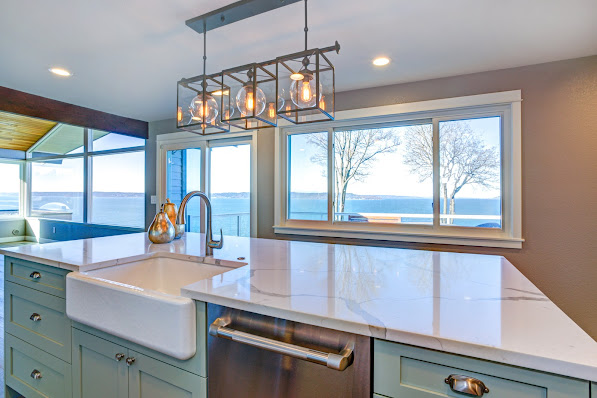
For a dose of glamour, introduce some glass door cabinets (the wall units), and finish the remaining in high gloss. If you have beautiful keepsakes to display, omit the doors in some areas and create open shelving that shows off your memorable pieces. Pretty up the kitchen island (or breakfast counter) with attractive décor items like an eye-catching vase with fresh flowers or an ornamental platter with fruits.
Hang a framed wall art that draws in all colours in the scheme. Using artwork is a great way to elevate any room. Add potted herbs placed on decorative racks, colourful cacti in terracotta pots, or stainless-steel utensils containers.
To create a traditional concept, use wall murals or special painting effects that can replicate any look from hardwood and bamboo to marble or limestone. These methods are inexpensive and easy to apply.
Bring in the Outdoors
If you love nature, you can upgrade your kitchen by bringing the outdoors in. It doesn’t matter if you don’t have much floor or counter space. A creative solution to adding foliage to a small space is to go vertical or use wall murals with lush foliage as the focal point of the kitchen. You can hang small potted plants from the ceiling or have hardware that projects them from empty wall spaces. If you have a nice deep windowsill, you can turn it into a mini herb garden or utilize it for vine plants.
For the ceiling-hung variety, you can decide how low (or high) you want the hanging cords. They can be adjusted to the appropriate length you desire
Give your Cabinets and Appliances a Makeover
You can rehabilitate your kitchen cabinet door and drawer faces (front). You can also give your old and drab appliances a brand-new look. There are unlimited numbers of styling possibilities that, if you have a knack for DIY tasks, you can apply by yourself. These are great low-budget design options that will transform any kitchen space from looking ordinary to becoming aesthetically pleasing.
If you don't have stainless steel appliances, you can use a paint-on stainless steel (liquid stainless steel) finish to upgrade your existing appliances. Change that dated look to a modern minimalist style. You can change the cabinet fronts by painting them. You can laminate them or apply some complimentary textured covering. You can apply decals to give them a totally refreshing look. You can also varnish them with coloured lacquer/stain.
Change Hardware and Fittings
From cabinet knobs and drawer handles, to switch and socket plates and pull-out systems, hardware can completely change the look of any space, including a kitchen. You can replace drawer and cabinet pulls for a style that will instantly update the room. And if you prefer the minimalist look of hidden hardware, that’s a great idea too.
Switch and socket plates are no exception. You can choose from a vast number of colors in both modern and traditional styles. Although light fittings are not hardware per se, they can still give a kitchen a dramatic effect on a low budget. There are ways you can upgrade existing lighting; paint, change of shades, etc... If you have the standard run-of-the-mill type, you can combine (or replace) them with decorative sconces, spot, or dramatic pendant lights. Light fittings and fixtures can be the perfect accessory if used correctly. They not only brighten up the kitchen; they also change the mood and feel of the room.
Related article


