The Federal period of American design was roughly between 1789 and 1823, right after the U.S. became an independent country. It reflected new national pride and borrowed classical ideas from ancient Greece and Rome.
Why It Started
American leaders such as George Washington and Thomas Jefferson liked Neoclassical (Greek and Roman) architecture. They believed the young republic should look orderly and balanced, so Federal style became popular for government buildings and wealthy homes.
Architecture and Interiors
Federal interiors and exteriors were elegant but restrained, showing the ideals of the new nation: order, clarity, and cultural confidence. They were less ornate than the Victorian style that came later, but they were more refined than the Colonial style before them. Federal architecture featured:
Symmetry
Proportion
Classical shapes similar to Georgian designs (but were more refined).
Interiors were airier and lighter than earlier styles. Features were:
High ceilings
Subtle plaster details
Decorative cornices (instead of full wood panelling)
Plastered walls
Painted, wallpapered, or fabric-covered.
Windows, fireplaces, doors, and mantels with delicate trims and ornamentation.
Furniture and Decor
Federal furniture was elegant, balanced, and inspired by European classical styles, especially the neoclassical Adam style. Common furniture pieces used include:
Hepplewhite sideboards.
Chests-on-chests.
Desks
Cabinets, often with contrasting veneers, inlays, and delicate shapes.
Décor objects in wealthy homes included:
Bevelled mirrors.
Tall clocks.
Porcelain pieces.
Window treatments, like swags and tails with ornate fringes.
Wood was a widely used material because America had plenty, plus there was easy access to woodlands. Craftsmen made slender columns and fine mouldings in wood, adapting classical stone details into lighter wooden forms.
The nobles and wealthy of the 18th century (about 1714–1830) in Britain and America brought on the popularity of the Georgian era style. It was all about balance, beauty, and comfort, and people copied it because it looked classy.
Key Features of Georgian Rooms
The characteristics of Georgian rooms include the following features:
Symmetry & balance: Everything was lined up, windows, fireplaces, furniture; so the rooms were always orderly.
Classical style: Designers borrowed ideas from Roman and Greek architecture, like columns, cornices, and decorative mouldings.
Tall sash windows: Big windows that let in lots of natural sunlight.
Wall details: Walls had wood panelling, pretty plasterwork, or scenic wallpapers.
Elegant colours: Soft pastels, like light blues, greens, pinks, and white, were popular in the later years of the era.
Furniture and Interior Decor
Mahogany wood: Chairs, tables, and cabinets were often made from rich woods like mahogany.
Curvy shapes: Furniture had graceful curves and carved details.
Imported style: Chinese-inspired patterns (called Chinoiserie) and other exotic designs appeared in wall coverings and decor.
British vs. American Differences
While rooms stayed formal with lots of decorative plasterwork and classical accents in Georgian Britain, in America, early homes were simple, but by the mid-1700s, people started copying the British styles, with big rooms, high ceilings, and carved wood details.
Conclusion
Georgian interiors shaped how elegant homes looked in the 1700s. Many design ideas from this period, like balanced layouts, classical details, and pastel colours, still influence interior design styles of today.
Eclecticism is a mix of many art and architectural styles from different times and places, all combined into one look. Instead of adopting a single style idea, designers borrowed elements they liked from older styles, combining them to create something new.
An eclectic interior style.
When and Why It Happened
The eclectic style started in the late 1800s, at the end of the Victorian era. It became popular in the 19th and early 20th centuries.
The style grew in popularity because people were curious about art and buildings from all over Europe and beyond, and through travel and illustration prints, foreign tastes developed, and their styles became more popular.
What Eclectic Interiors Looked Like
Inside eclectic houses, the rooms were not tied to one period either. Designers put together furniture, rugs, and art pieces from different eras and cultures.
But eclectic didn’t mean random splat-dash arrangements. The pieces were chosen to tie with colour, pattern, texture, or shape. This made the room still feel attractive and cohesive.
In conclusion, eclectic design showed that creativity and personal expression were changing how homes were built and decorated. Instead of copying one historical design/style exactly, people began blending the best parts of many styles to make new looks that still influence design today.
Bamboo floors look sleek, warm, and are beautifully natural materials, but the dilemma many homeowners face is how to keep them looking bright and clean at all times.
Bamboo wood flooring (strand woven).
When it comes to cleaning and maintaining bamboo, many manufacturers recommend treating it as you would other hardwood materials. It only requires light cleaning often, but not heavy moisture. Never wet bamboo floors.
This is a simple and realistic guide to keeping your bamboo flooring in top shape without using fancy products or complicated routines.
What to Do
Wipe spills quickly (and buff dry).
Use a slightly damp cloth to lift spills, then dry-buff right away. The goal is to avoid pushing moisture into the grain, which will leave visible marks over time.
Remove scuffs with a soft cloth.
Light scuff marks usually lift when you rub them gently with a dry cloth. For stubborn marks, use a cleaner made specifically for bamboo or hardwood flooring and buff the area dry.
Vacuum often. Daily, if the space is busy.
Fine grit is the silent enemy of bamboo floors. Regular vacuuming helps prevent tiny particles from scratching the surface, especially in high-traffic rooms.
Use ONLY bamboo-safe or hardwood-safe cleaning products.
If you need deeper cleaning, choose a non-alkaline, non-abrasive product designed for bamboo or hardwood. Check the label to make sure it is wax-free.
Sweep with soft bristles often.
If vacuuming isn’t your thing, choose a broom with soft, fine bristles to avoid surface scratches.
For rubber scuffs, use a small amount of wood floor cleaner.
Apply the cleaner to a cloth. Do not apply directly on the floor. Rub the scuff gently until it disappears.
What Not to Do
Avoid using cleaners that leave residue.
Anything that creates a film can interfere with future refinishing. It can also dull the natural look of your floor.
Never use a wet mop or soaking-wet sponge.
Even though bamboo handles moisture better than some woods, standing water or drenching can still cause damage.
Follow the manufacturer's dilution instructions.
If your wood floor cleaner requires mixing with water, stick to the recommended ratio.
Don’t let dust and debris build up.
Daily foot traffic brings in particles that scratch the floor surface over time. Keeping the floor swept and cleaning it lightly (occasionally) helps preserve its finish.
Avoid using dust-mops with stiff bristles.
Coarse brushes can leave micro-scratches.
Do not use steam cleaners.
Steam can penetrate and damage bamboo flooring, and many flooring manufacturers warn against it because the effects can be permanent.
Make Cleaning Your Bamboo Floor Consistent
Taking care of bamboo wood floors isn’t complicated; it just comes down to consistency and gentle habits. A quick daily sweep, fast spill clean-ups, and using the right products go a long way in keeping the surface smooth and beautifully natural. With these simple routines, your flooring stays protected, looks fresh for years, and continues giving your interior that warm, modern glow without any high-maintenance drama.
The early American homes of the first Colonial settlers were no more than makeshift structures. On setting foot in America around the mid-1600s, their immediate concern was to have a roof over their heads and a place to keep themselves safe and warm. They did not need pretty structures, nor did they give any thought to planning the interiors of their homes in any tasteful manner.
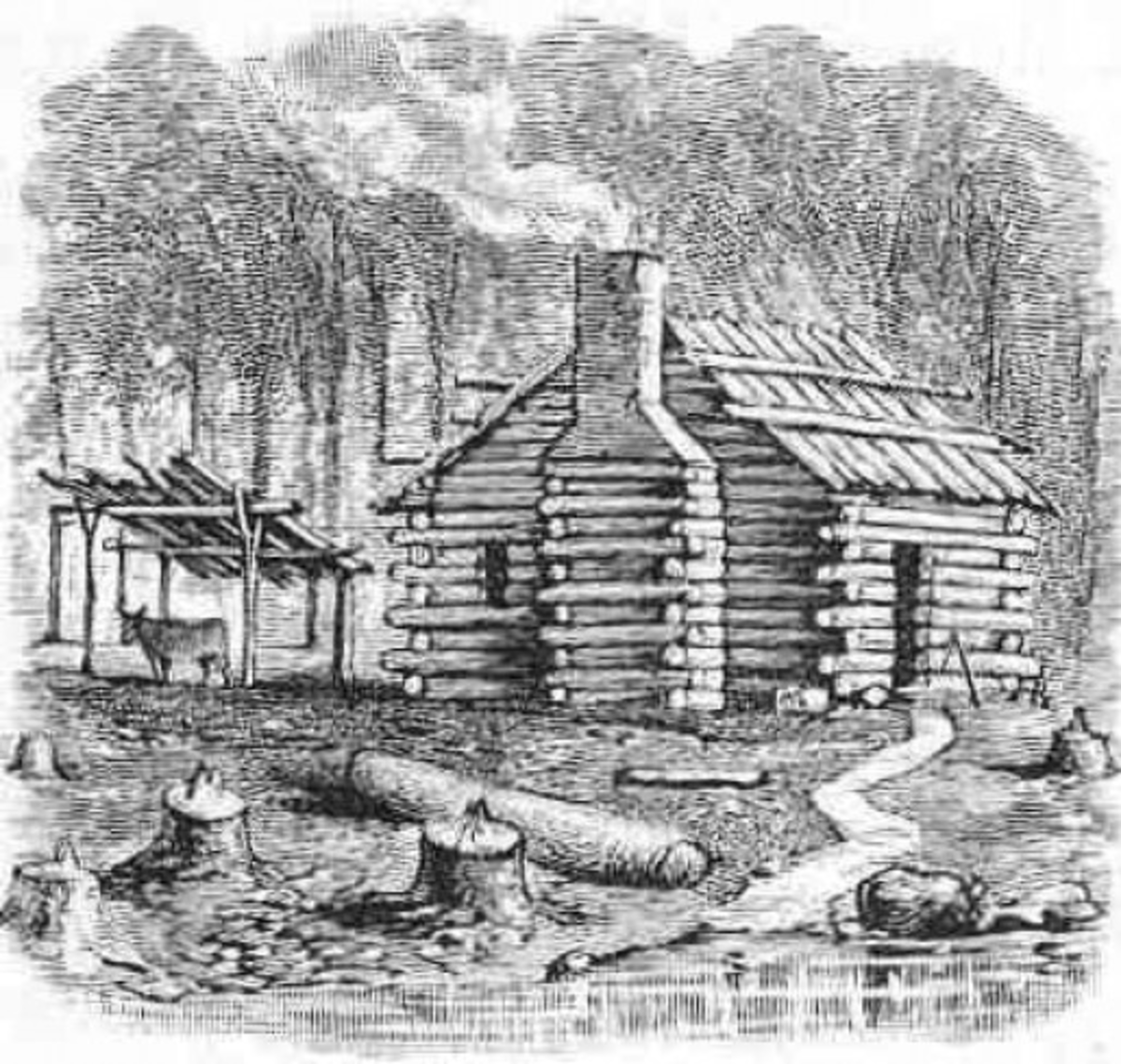
The first American settlers built homes out of rough-hewn logs felled in their localities.
The Earliest Home Designs
The first-generation homes were one-story, boxy structures, basically an open space with four walls and roof coverings that protected them from the elements. The open-plan interior served multi-purpose functions: living, dining, cooking, and sleeping. There was also a lone fireplace that served two purposes: as a heater for the cold months and a stove for cooking family meals. The chimney was a crudely formed outlet for smoke generated from heating and cooking.
Building Materials
Building supplies were materials gathered wherever they settled: stones, rocks, tree branches, bark, and felled timber logs, all locally sourced. Roofs were thatched with dry vegetation like hay, straw, water reed, and rushes.
How They Were Built
The buildings were square or rectangular box homes with only one door opening. Each structure was built by:
Placing cut-down, rough-hewn tree logs, one on top of another, up to a little above headroom height, to form the first exterior wall.
Creating a second wall by interlocking wood logs at the ends to make the first corner.
Applying the same technique to make the third and fourth external walls and corners.
Making the structure weather-tight and sealed. To keep small creatures out, cracks and spaces were filled and hand-compacted with mud or clay. The sealing material used depended on what was available in their immediate environs.
Thatched roof coverings are built by layering sun-dried vegetation in such a way that it sheds water away from the interior. Densely packed, it also served as insulation.
Upgrading for Comfort
Soon, the Colonial settlers began to expand their homes by devoting more efforts to provide some comfort in their newfound country.
By 1675, home designs advanced to two-room structures with central fireplaces that served both rooms. Chimneys were central but came with better-defined apertures.
Entrance doors were positioned centrally on the longer wall of the rectangular structure, with window openings installed on the narrower sides of the building.
Eventually, more homes added upper rooms, much like attics, that were accessible through very steep stairs that led from a tiny hallway at the entrance of the cabin.
Home Styles Became More Complex by 1750
By the mid-18th century, the first settlers designed and built more complex structures with four rooms. The structures had a central corridor or hallway that ran the full depth of the building and a single wooden staircase that led upstairs from the hallway to the rooms above.
An attempt to fashion out a central fireplace and chimney proved clumsy and impractical. The builders found that the two-chimney features were more efficient and effective for the new style four-room buildings. Each chimney served two rooms.
By the late 18th century, the first forms of interior enhancements evolved.
The only interior décor features introduced were trims and mouldings fashioned after classical architectural forms.
First published at HubPages by the author, on 10/15/2011