Affordable Headboard Idea: Gallery of Framed Photographs and Artwork

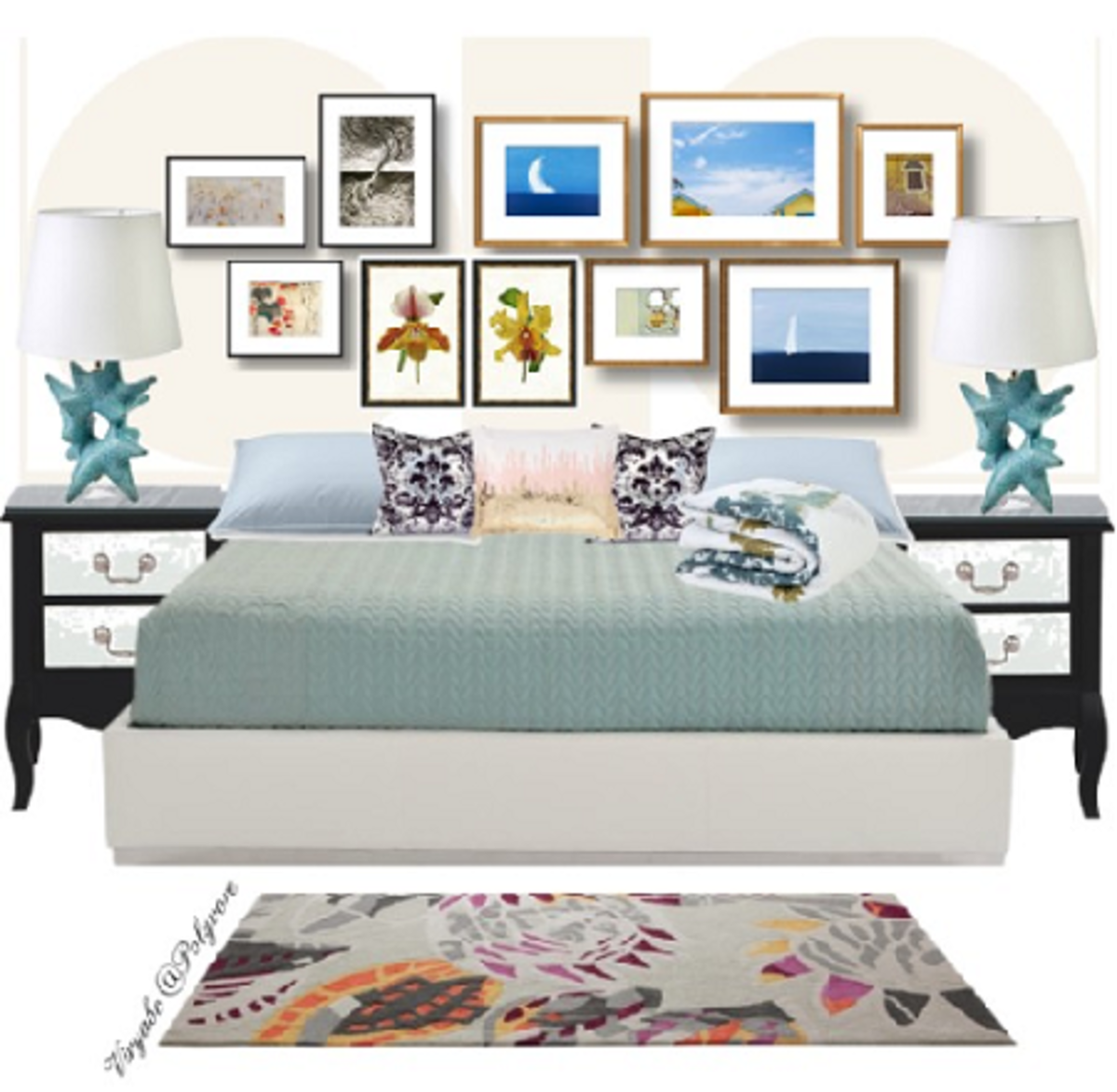
Create a headboard with a cluster of framed images that show your personal style.
(Image created by viryabo@polyvore)

If you are a conformist and feel safer keeping to conventional headboard designs, you’ll be losing out on expressing your creative ideas. However, non-conformists who like the unusual and wish to reflect it in the style of their bedroom don’t follow any hard and fast rules when it comes to home décor. They get creative and save money in the process.
This unique headboard idea involves hanging a cluster of framed favourites on the wall above the bed's head. Framed art can be anything from black-and-white photographs to abstract paintings, all in varying sizes for an asymmetrical look or, if you prefer, arranged in a symmetrical order. This arrangement will not only create a focal point for the bedroom but also make the entire room look very impressive.

If you have a collection of pictures that hold fond memories of loved ones, pets, friends, or colleagues, instead of having them stashed away somewhere, soon to be forgotten, gather them together and frame them with different coloured picture frames. Use them to create a gallery to serve as a headboard.

If you don’t have such collections, use art. You will find small art images and pictures at flea or street markets.

Tips

  • Use sepia or black-and-white images with white or black frames for a classic vintage look.
  • For a more colourful and modern look, use coloured photographs in bright colourful frames.
  • For a dramatic look, hang as many as you desire, even up to the ceiling if you love the look.
  • Ensure you allow a gap between the bottom line of the photographs and the top edge of the bed to give you enough space for ample pillow arrangements.
  • The trick is to ensure they are all small-sized framed art in varying sizes.


(Culled from originally published article by the author on Discover.HubPages in 2013)


Articles of interest

How to Apply Ceramic Tile Grout

Most DIY home repair enthusiasts can apply ceramic tile grout. It isn't as hard as many may think. If you are just learning how to grout or need a few tips to help you along, this article will give you grouting tips, tell you what you need to carry out the task and how to maintain your grout works.


How to Fill Gaps Between Tiles


Ceramic tile grout mix is a kind of filling material that is used in the construction industry, mainly for masonry works involving the application of tiles. It is used to seal ceramic tile joints after tile installations and to fill voids and cracks in between the ceramic floor and wall tiles.

The materials used for grouting depend on what material is being joined together. It can be composed of a cement and sand mix if it is required for filling cement block joints, or a cement-based epoxy if it is for filling joints of ceramic wall and floor tiling.

When you have coloured tiles but no matching epoxy filler, a colour tint of any shade can be added to the mix. With that, the tile grout will be a close colour match to the already laid tiles. Grouting material can also be made in a contrasting colour that highlights or complements the tiles. If this is the case, the colour tint and epoxy mix will contrast with the tiles.

Grouting is a simple task and can be done by most DIY enthusiasts. As long as you have the essential tools and grouting materials, the application is not a job that requires the services of professionals.

However, if you are not a hands-on person, you can always call in professional tilers from home improvement stores who will carry out your grouting works to your satisfaction.

Tools Required to Apply Ceramic Tile Grout


Before you commence the application, you will need to prepare adequately. Grouting can be a mess if you don’t use the right applicators and tools. To ensure a job well done, you'll need these simple things to perform your grouting task- whether you are installing new tiles, or re-grouting discoloured, broken, or chipped old grout works: 
  • Grout Saw/Remover (an electric grout saw ensures a faster job)
  • Scraper
  • Float
  • Sealer
  • Attachment
Grout Saw: A grout saw is composed of tungsten carbide blades and is used to cut and remove old tile grout. This is required if renovation works are being carried out on existing laid tiles.

Scraper: A scraper is a simple hand tool that is required to remove old grouting that has been discoloured with age.

Grout Float: A grout float is similar to a trowel used by masons but it has a sponge rubber pad at the bottom. It is used to smoothen the surface when it's just been freshly applied to the tile works.

Sealer: The sealer is water-based and is applied over dried grout. They must possess qualities that resist water, oil or acid-based contaminants.

Guide (Attachment): A grout attachment acts as a guide. It is placed over a rotary implement and it helps in the quick removal of old ceramic tile grout. It can be used in place of the saw for faster and better grouting work.

Preparations Required Before Grouting


Preparing for grouting works actually commences before laying the tiles. You want to determine how wide or narrow your spacing (gap between tiles) will be. To do this, you will need plastic spacers.

Plastic spacers help to space tiles evenly and squarely to ensure that the tiles are laid perfectly straight and squared and the gaps are the widths of your choice. After tile application and before grouting, the X-shaped flexible plastic spacers should be removed.

Now that you are ready to commence your grout work,
  • Mix the grout material with water. Note that the quantities required will depend on how much tiling needs to be done. Follow the instructions on the package carefully and ensure you use the right ratios of tile grout to water (or the acrylic latex liquid) mix.
  • Buy grout material that has an acrylic latex additive in its components. This will ensure good flexibility and eliminate the chances of having fine line cracks a few weeks after it has hardened.
  • If the tile grout you have purchased comes without the additive, you can get some acrylic latex liquid admixture which can be used in place of water.
The process of applying a white grout mix to a bathroom wall finished with blue ceramic tiles.


Instructions on How to Grout

These simple 10-step instructions apply to both wall and floor tiles grout works.
  1. Spray the already-tiled surface with a light mist of water. You can do this in sections so the water doesn't dry faster than you can work. The moisture will give the mix some moisture that without it, would affect its setting.
  2. Scoop some amount of grout onto the surface starting from the inner corner of the room. Spread the paste with a grout float held about 30 degrees horizontally from the surface and move in a wiping motion at an angle to the gaps.
  3. Work in a consistent pattern and avoid haphazard smearing.
  4. Carefully and evenly spread the mix while compacting it into the gaps. Add more grout and spread until the spaces are well compacted.
  5. Use the edge of the float to scrape off the excess grout from the floor or walls and wait for 20 minutes (or whatever time is stipulated on the package). During this waiting period, clean all messy grout from the edges of the walls or floor in case there has been a bit of smearing whilst grouting.
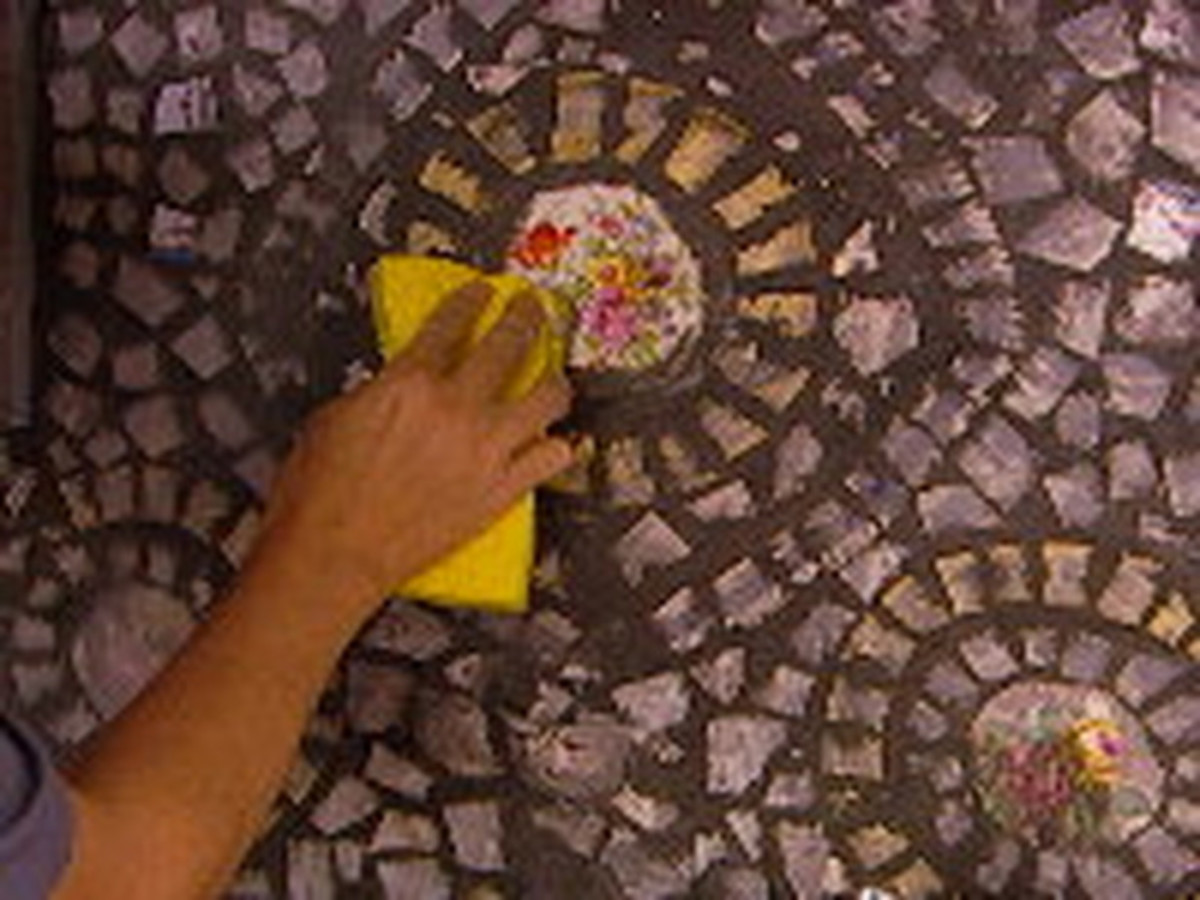
  6. Sponge-clean the tiles. Cleaning with a sponge removes the thin film of grout from the tiles without affecting the grout within the gaps. It is important to keep to the stipulated waiting time or it will become difficult to remove the tile grout film.
  7. Rinse the sponge often while cleaning, ensuring the water is wrung out well. Always wipe gently but firmly.
  8. After about 40 to 45 minutes, again depending on the stipulated drying period on the package, clean the faint residue of grout off the tiles using a simple paper towel. At this time the grouting has hardened, though not thoroughly, but enough to give a good clean a chance.
  9. After the application, give your finished work a spray of misty water twice a day for three days after grouting.
  10. After curing, apply the grout sealer to prevent the growth of mould and mildew, and prevent staining, yellowing, or darkening.

Ceramic tile grout mix comes in a variety of colours so there is something in the market that will suit each individual need. There are also the un-sanded and the sanded varieties which contain some sand, great for those who want a special effect grout finish. The sanded type can be used for wider gaps because the sand serves as a filler, while 'un-sanded' grout is used to fill very thin gaps in mosaic tiles, marble tiles and granite tiles.

How to sponge-clean excess floor tile grout.

How to Maintain Ceramic Tile Grout

Occasionally, clean your tile grout by applying a baking soda paste on the grout, leaving it on for some time, and then washing it off. Alternatively, you can use a solution of water and hydrogen peroxide to clean grout, especially if it is stained, or yellowing. You can also use a commercial grout cleaner and let it sit for about 15 minutes before scrubbing the dirt away with a sponge and rinsing it with clean water.

Another way to clean and maintain grout lines is by adding oxygen bleach powder to your mop water (for floors) or your cleaning water (for walls). Apply the solution liberally and on the grout joints. Leave it on for about 15 minutes, then clean thoroughly with clean water.

For a homemade cleaning solution, mix together a half-cup of baking soda, a quarter-cup of hydrogen peroxide, and one teaspoon of dishwashing liquid and apply onto the grout/ after about 10 minutes, scrub off the mixture from the ceramic tiles grout lines and rinse well.


(Originally published by the author on Discover.HubPages in 2009)


Articles of interest

*If you like this post, and find it beneficial or interesting, kindly share it on social media. It will be greatly appreciated :)


Decorative Lighting Design for Homes and Offices

Why does lighting design play a major role in interior design, and why is a lighting plan an important part of an interior designer’s proposal? Find out why lights and lighting are important, and how they are integral parts of any interior design concept.


Lighting is the most practical, exciting and mysterious of all design mediums. It's exciting because of the ability to transform any physical object it illuminates. A mysterious medium, because light rays are invisible to the naked eye until they touch an object. And it is practical, because of its value to our lives and aesthetic properties.

Light possesses the absolute power to enhance and display objects to the human eye so it's virtually impossible to evaluate any visual effect without the presence of lights. To understand lighting and to design effectively, an electrical lighting designer must understand its technology and at the same time aim to be decorative.

Types of Lighting and How It Relates to Interiors

Illumination and the use of light to achieve a general, creative, or aesthetic effect include artificial lights at night and natural daylight that captures the day. So, whether you’re lighting your home or office, incorporating all three types of lighting into your interior design theme will ensure you create the ideal stylish space in every room. Three types of lighting are directly related to interior design.
  1. Ambient lighting
  2. Accent lighting
  3. Task lighting
 
Ambient lighting
Ambient lights are general lights that are a necessary part of any good lighting plan. These are the lights that provide an overall glow to interiors. They are meant to set the tone for space and create enough light to see and move around safely and comfortably.

Ambient lighting generally consists of overhead light fixtures that include recessed lights, ceiling lights, spot and track lights, pendant lights, and chandeliers. Table and floor lamps also fall into this category.

Accent lighting
They create a focal point that builds on the ambient lights in a room. By adding dimension, accent lights are used to draw attention to decorative features like wall art, plants, or a display statue, and highlight them as special design elements of the interior.

When well placed, accent lights draw attention to the elements, without drawing attention to how it is being lit. Examples of accent lighting include track lights, recessed lighting, picture lights, and wall sconces. They can be set at an angle and directed to serve as a spotlight.

Task lighting
These are localized lights and are provided by a variety of different sources. This allows for adjusting the lighting of a workspace and brightening or darkening it as required. Effective task lighting is ideal for reading, cooking, studying, or working. Basically, it is meant for whatever activity or work it is needed for.

A good task light should provide about 40 to 100 watts to a workspace. Task lighting can be created using various light sources like recessed lights, track lighting, desk lamps, or adjustable task lamps. Halogen bulbs can be used for task lighting because they produce white light similar to natural daylight.

Lighting and Interior Design

One of the few design elements that can be changed or manipulated easily and quickly is lighting. With the click of a light switch or the turn of a dimmer switch, light can alter interior space aesthetics, moods, colours, patterns, or intensity.

Lighting is used to direct attention to some great interior décor piece within a room because the eye always (unconsciously too) seeks out the brightest and most interesting object in its field of vision. At night, outdoor lighting is used effectively to direct movement through or within an outdoor environment.

There is no doubt about the importance of lighting design and how it is being used as a direct source of interior design and decoration. Below are some examples of how lighting properties can be related to the area, space, and interior design.
  • Lights reveal objects' shapes and forms. It can make an object look flat, or it can visually increase its dimensional form.
  • Effective lighting design can cause objects to seem to recede into the background, or it can visually accentuate the separation of planes.
  • On stage in the theatre, an effective lighting design can make old starlets appear younger, and younger stars with elderly roles will actually look aged.
  • In the home, a good lighting design with a warm effective ambiance can make home occupants and guests look calm, healthy and refreshed.
  • It is a well-known fact that light placements are used in jewelry shops to enhance glass, making them look like gems. This is achieved by cleverly manipulating lights through a lighting designer's creative skills.
  • Interior designers know that costly furnishing may look like discount store copies with the wrong lighting. So beautiful qualities such as sheen and colour should be properly revealed with enhanced lighting.
  • Store lighting designers have a way of lighting up meat counters so that meat looks fresh throughout their opening hours (even though stale food may be slightly off-colour). Vegetables will look crisp and fresh at all times with the right lighting illumination.
  • Silhouette projections produced by lights can form interesting surface patterns on floors, walls, or ceilings.
  • Transparency projections can produce an impression of detailed realism or visions of the wildest 'flights' of our imaginations.

The Architecture Of Light (2nd Edition): A textbook of procedures and practices for the Architect, Interior Designer and Lighting Designer - This is a vivid, image-packed book of lighting concepts and techniques. It is the perfect companion for lighting design students and professionals alike.

Effects of Lights on Colours

Colours in an interior space can be delicately balanced by selecting different light sources, each with its own specific attributes. So for example, if the interior décor is dominated by reds and blue tints, it's possible to subtly alter the emphasis of each colour by supplying different artificial light sources.

In interior spaces, no single source of light is visually pleasing. It is good to have a mix of portable lights such as lamps and installed lighting fixtures. Using excessive light from one source and in one place causes a wild glare and can become (quite) unpleasant. It is better to use more light sources for a successful and more effective lighting scheme.

Lighting, as an abstract and intangible design component, has a significant influence on our perception of the environment around us and whether or not our visual experience will be pleasant (or not) depends on a lighting designer's skills in creative lighting design.


(Originally published by the author on Discover.HubPages in 2019)


Related Article:
Interior Lighting and Its Effect on Your Colour Scheme

9 Golden Rules for Beginner Interior Design Project Managers

 If you are a beginner project manager in the interior design industry, this article is for you. It examines the nine golden rules to follow if you are seeking ways to improve your project management skills. They must be regarded as the top guidelines required to help ensure you manage your building construction project with ease.


The simple but vital rules will help improve your project deliverables and assist in approaching your project management tasks professionally. As an interior design project manager, you must satisfy your client’s needs by creating a comfortable and conducive environment for those occupying the interior space when the project is completed.

The Golden Guidelines

  1. Practice positive teamwork.
  2. Have a good client/project manager relationship.
  3. Have a good relationship with project team members.
  4. Keep project promises.
  5. Coordinate methodically.
  6. Work and learn as you go along.
  7. Always expect the unexpected.
  8. Collaborate with all stakeholders.
  9. Be a listener.

Practice Positive Teamwork
Adopt the practice of teamwork. For successful project implementation, you need to approach issues from various perspectives. As a project manager, you must realise that what you see visually is different from what you think in your mind. With teamwork, you will find that what you may miss may be observed by others. Endeavour to make it a habit to find out what others see that you may miss.
 

Have a Good Relationship with Your Clients
It is important to stay close to your clients and be aware of their feelings about the project. If you can, ensure you over-deliver than expected, to allay their reservations, fears, or concerns which may be major or minor. As their concerns continue to evolve through the course of the project, take advantage of that to give more than what is expected of you. Once you are in tune with your customers and stay in constant contact, they will see you as a gem.
 

Have a Good Relationship with Your Project Team
Your team members are important—almost as important as your clients are. You can't have a great relationship with your clients if you ignore your construction project team. With the right mindset, achieving a form of camaraderie-ship with team members should not be a challenge. Yes, there are some decisions you may take on behalf of the whole team, but for a wonderful working relationship, taking care of each team member as an individual is important.
 

Keep Your Project Promises
This is a top golden rule for project managers. Project management in the building industry can be challenging at times because it is easy to lose sight of what you are doing, especially if it is a large project. It is also easy to go off-track if you don't pay attention to details. You have to keep to your project promises and constantly remind your team of all promises made, plan on how to work them and plan how to fulfil them.
 

Coordinate Methodically
You must pay attention to critical details and discussions. Remember that a construction project is an ever-evolving network of obligations. To avoid drifting from the important issues, make sure that contractors, sub-contractors, and craftsmen/artisans are clear about their requests in writing, give you pledges that have completion dates, and share with you their opinions that advance the purpose of the project.
 

Be Prepared to Work and Learn
Couple your actions with learning because working on a construction project is a wonderful learning opportunity. It's like learning on a job because each project has its peculiarities. Inculcate the art of incorporating actions with learning in all your projects, large or small, and encourage your team members to learn as they work. They will appreciate this concern for their own good. While your clients will benefit from your smart insights, it will also make your job easier to accomplish.
 

Always Expect the Unexpected
A professional project manager must embrace the uncertainty that's rife in the building of structures. It is not always smooth sailing—far from it! Issues do rear their head while on a project, and you'll find that there is far more that you don't and can't know than what is expected. You must learn to be resilient to any unexpected occurrence and be aware that you and your team will learn something new about tackling challenging issues. There may be changes in promises to clients, altering of agreed concepts, or price changes, for instance, but what is important is how you solve them so you can still deliver on your promises.


Collaborate with All Stakeholders
Collaborate fully with all people and performers of the building construction project. Make this one of your golden rules. Waiting for the project to reach a critical stage without collaboration will result in disaster. Carry all along, and don't wait until the project has gone south to get their contributions. Start the collaboration process from the onset and continue throughout the project. This will guarantee that everyone has a focused purpose and will ensure a successfully implemented project.

Be a Listener
If someone on the project has something to say, as the project manager, listen attentively. This doesn't mean you don't have your own ideas or impressions, but listening is a quality that those you work with will appreciate. Some people can only voice what they feel in a flash of a moment with well-intended suggestions, so take the time to listen. Ask them questions and engage them. At times, ask for other opinions on matters relating to the project.


A Must-Have Book for Beginner Project Managers


What are the major challenges faced by interior design project manager, how can they be avoided, and what are their solutions? This interior design handbook – Interior Design Project Manager: Challenges, Solutions, and Golden Rules, will instruct you on how to overcome the challenges of managing interior design projects and how to avoid failures caused by unclear plans and objectives.

How to Shabby-Chic Your Bathroom Decor for That Well-Worn Appeal

The shabby chic design has become a very popular style, judging by the heightened interest in the old and well-worn look that many homeowners are applying to their home décor theme.
Hand-drawn shabby chic bathroom with a beautiful old worn look.
(Image used under license from 123rf.com)


As interior designers and decorators are selling the concept to clients who favour the traditional old-country look that a shabby chic décor is, the popular decorating style didn’t start off as a design theme until a few decades ago when the term was first coined and when it became fashionable to join the shabby chic enthusiasts’ bandwagon.

The shabby chic style embraces the look of aged scruffy-looking furniture and furnishings like wood that shows layers of paint, scratched and pitted wood, washed-out prints, white-washed or bleached floors, and pastel tones, all typical features of the famed ‘distressed’ shabby look.

How to Create a Shabby Chic Look


If you want to upgrade your bathroom on a shoestring budget without compromising on quality and style, or if you desire a timelessly chic look that gives a warm relaxed feel, then you need to take the shabby chic style into your bathroom.

Bathroom designs themed after the shabby chic style are one of the easiest design concepts to achieve because their design attributes are simple to put together. So, what do you need to create a shabby chic bathroom décor?

Wood elements – There is no shabby chic decor that is complete without wooden elements. The wooden elements (furniture) like vanity units, cabinets, shelves, and general storage items must be wood that has been distressed to make it look old and worn. Paint all wood trims and crown mouldings white because white is the main base colour of shabby chic themes.

Floor finish - Whitewashed and pickled floors are typical of the shabby theme. If you desire a bleached effect for the bathroom floor finish, consider using pine and whitewashing it after installation. However, you will also find faux bleached wood and ceramic floor tiles that will give a bleached effect, on the market. Pickling is a method that is best used on oak wood and involves applying a white stain that will brighten the wood surface while still exposing its grain pattern. Ceramic floor tiles must be neutral shades if faux-bleached floor tiles are not preferred. Remember that words such as faded and bleached remain common terms often applied to the shabby chic bathroom style.

Fabrics – You will require some textile materials in the bathroom like the window blinds, curtains, or shades. The colour scheme must be pale while their prints and patterns must be vintage-inspired, preferably florals, just like chintz fabrics. Shabby chic décor always calls for a soft and feminine feel which can be achieved with the type of fabrics and textures chosen.

Palettes - Pale palettes are characteristically shabby chic colours, so the bathroom colour scheme must be in soft and pale tones. Pastel colours come to mind here. Paint the bathroom walls with a matte finish for an authentic country-style look. The walls must not be shiny or glossy, but rather, they must look dull and worn. Good combinations are white and off-white, white and pale yellows, and white and cream. Another popular combination is vintage yellow or pale gold and a sand hue finish which creates a soft warm feel that is typical of the shabby chic look.

Wallpaper and wallcoverings – The best and easiest way to integrate the shabby chic theme into your bathroom is to finish the walls with shabby chic wallpaper and wallcoverings. It is not only easy to apply wallcovering to complement the décor, but it is also an inexpensive way to give your bathroom a fresh new country-style look. You can be as bold or as neutral as you like and can paper the entire walls or a single wall to complement the other three walls in the room. Most shabby chic wallpapers come in neutral colours with elegant, Georgian, lace-style patterns. Wallpaper with subtle features or trailing patterns will give the shabby chic bathroom a stylishly modern twist.

Bathroom furniture - You can use old or discarded wood furniture and upcycle them. You can also utilize old home décor objects, and other reusable interior materials, including antique and vintage furniture. If you have none of these, you can buy cheap furniture items from the stores, then ‘distress’ and paint them. The essence of the shabby chic style is basically decorating with and displaying furniture that is old and worn as in 'passed down' antique or vintage items. You can use some of your old furniture, with their original old paint or stain, if they possess distinct signs of age.

Tip 
You can imitate the worn look by painting the furniture and allowing it to dry thoroughly. After it is dry, hand-sand it by gently rubbing the top coat of paint with sandpaper to show a bit of the wood and patches of the base coats.

Furnishings – The furnishings you choose must complement and enhance the new bathroom makeover. Choose linen and cotton fabrics if you can, instead of synthetic or man-made textiles. Use white linens inspired by the old French and ensure they look vintage, worn, or lightly bleached. To add a modern twist to your theme, add pastel pinks, blue, or green colours, preferably tiny floral prints on a fresh white or off-white background. Hues and tones can be introduced in towels, curtains, glass jars, candles, floor mats, and other accessories.

Bathroom Accessories to Complement the Shabby Style


Your bathroom makeover demands that you must accessorize it and it is equally simple to do this. You probably have some décor items or other objects around the house but just in case you do not, the list below will open your imagination. Find some of these fixtures and decorations and use them to enhance your bathroom décor . . . to add the ‘chic’ to the ‘shabby’.

  • Oval or round-shaped antique gilt mirrors or rectangular silver-framed mirrors
  • Classic style wall sconce light(s)
  • Shallow shelves
  • Roll-top bath (if you plan a total makeover)
  • Lace, chintz, or voile curtains
  • Set of Oka baskets to store towels, toiletries, and other bathroom things
  • Wooden robes rack or wall-mounted vintage hooks
  • Ornate toilet roll holder
  • Cottage-style towel rail
  • Shabby chic cupboard
  • Classic style lacey shower curtains
  • Shabby chic framed artwork
  • Ornate antique-style table-top clock

White towels are good with shabby chic themes but soft creamy colours like shades of champagne are great too

Good design practices allow for a mix of the traditional with the modern, so, bathroom sinks, faucets (wall mounted taps keep lines clean), bathtubs, WC, and shower enclosure can remain contemporary or modern.

Shabby Chic décor ranges from the stylishly traditional to the modern and understated. The style will fit in any room, from the foyer and kitchen to the bedroom and bathroom and has become a lifestyle and worldwide design movement.

For further information, graphic illustrations, and beautiful photographs, this book titled - Shabby Chic Interiors: My Rooms, Treasures, and Trinkets by Rachel Ashwell, is lavishly comprehensive and well-detailed. If you are a designer, a decorator, or somebody interested in home designs, styles, and themes, you will draw much inspiration from this book.


(Originally published by the author on Discover.HubPages on 02/26/11)



Articles of interest:
Contemporary Interior Design Styling – Adding a Touch of Drama to Living Rooms
7 Ways to Upgrade Your Kitchen Without Spending a Fortune