Hanging Artwork: 7 Mistakes to Avoid

Having wall art and paintings make a whole lot of difference to an interior space. Not only does it make your vertical surfaces interesting, but it also adds style to your room. But if you thing hanging wall art is easy as pie . . . well is not that easy to get it right.


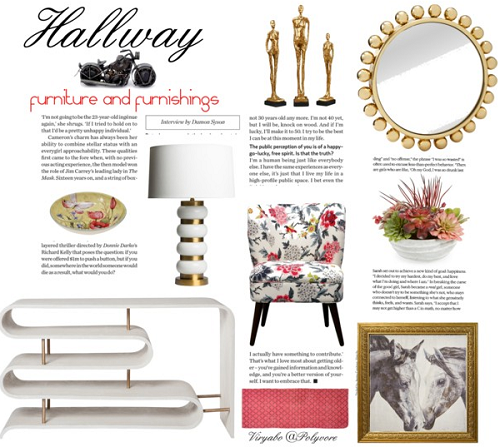
Created by Viryabo@Polyvore

Many homeowners don’t know that hanging art on walls is an art in itself. So it’s not uncommon to find that people make mistakes which are not quite easy to once you’ve punched holes in the walls, or framed some painting that looks best unframed.

These are 7 of the most common art displaying mistakes to avoid.
  1. Thinking that all art paintings require framing – Not all paintings, posters and the like need to be framed as some artwork look better unframed
  2. Using the wrong scale of a framework for your paintings
  3. The artwork is hung either too low or too high. Hang paintings 60 inches midpoint from the floor to the middle of the art.
  4. Art is hung lopsided or crooked making it visually un-levelled.
  5. When forming a gallery, collage, or grouping of artworks on the wall, you failed to plan beforehand.
  6. You don’t realise that the size of the artwork in relationship to the size of the wall it is mounted on is important. Hanging a small picture on a large wall or a large work of art on a small wall is a no-no.
  7. Filling all walls in the room with pictures, paintings, and posters. 


Other Picture Hanging Blunders to Avoid


Don’t restrict yourself to hanging artwork that has a mix of all colours of the interior space. It’s best to use them to break free from the confines of colour palette choice. And don’t create a dull boring effect by hanging the same type of art on the walls.

Hang a mix of artwork . . . framed paintings, metal art, works on stretch canvas, ceramic plates, tapestries, and other wall art pieces. A variety of types and sizes of wall hangings will spice up the room and ensure it is aesthetically pleasing.

And finally, not layering your wall art to connect them to the rest of the room’s décor is a mistake most people make.


Create exciting layers by positioning a floor lamp right in front of a hung painting or place a potted plant to its side. Let a few fronds float in front of the art. This form of layering helps connect your art to the rest of the room, creating a more stylish look in the process. 


Further reading:
How to Style an Entrance Hallway
How to Decorate your Home with Accent Chairs
7 Room Partition Ideas
How to Develop an Interior Design Concept
 

How to Create a Work-from-Home Office Workspace

Working from home is not new. All over the world, people have worked from home. But today, things are different. Almost everyone does. Thanks to the 2020 pandemic and COVID-19, which practically shut the entire world down.
 
If you like the thought of working from home, now is the time to go for it.

Created by Viryabo@Polyvore

What you Need

There are a few things you will need to put in place to have an office at home. Yes, many may work on their coffee table, on the floor, or on the kitchen counter, but it's not the best, unless in a temporary situation. It's untidy, to say the least, and depicts a disorganized individual.

When working from home is a permanent situation, you need a workstation. You are running a business, a money-making venture that demands a serious approach, so depending on the work you do or the tasks you carry out:

Find and create an area to set up your workspace. It can be anywhere within the home. The unused garage, the hallway, a dead-end, in the attic, or bay window.
The space must be conducive to your work. It must be out of the way of members of the household. Run your business without encroaching on other zones within the interior space.

Interior Spaces to Consider

Consider these areas and identify their possibilities:
  • Under the steps.
  • 1st-floor landing.
  • Free wall space.
  • A repurposed closet.
  • A guest room that doubles up as a study or home office.
  • A nook or recess (at least 90cm (3ft) wide x 60cm (2ft) deep).
  • An enclosed patio or outdoor room.
  • The attic.
Ensure perfect integration between your home office setting and the rest of the room.
 

Workstation Setup

Finding the best space is the easy part. Making it functional, comfortable, and pleasant is not so easy.

You must personalise the space. Make it cheery, bright, and colourful. It must look purposefully put together. Thoughtfully planned out. Your home office must look passionately designed. It must be an attractive business hub infused with energy.

To achieve this balance:

1. Blend it with the surrounding style.

2. Make it organised and clutter-free.

3. Install a cork memo board to pin notelets, to-do lists, calendars, or photos.

4. Save space and store most of your work electronically if you can.

5. Make sure your desk and its accessories match the room’s décor and theme.

6. Make the workstation a flexible space, in case family members wish to use it.

7. Ensure that your furniture corresponds with the scale of other items and features in the room.

8. Create storage if you have physical files, by installing floating shelves above the desk.

9. If your work requires you to store a lot of paperwork, consider installing a vertical shelving system close enough to get things at arm's length.

10. Add a splash of colour using wall art, the chair, and a runner rug.

11. Hide all electrical cords. This will make your workspace clean and organized.

12. Make sure that you have a comfortable chair because you may need to sit for hours to get work done.

13. Have good lighting for your desk and its close surroundings.

14. Personalize your workstation with mementoes and other things that make you motivated and cheerful.

Remember, your home office is where you'll spend a great deal of your time working, so, you must be happy and comfortable with its setup.
 

Workstation Furniture and Furnishings

Typical furniture required to set up a work-from-home office is pretty minimal: a desk or work surface, a comfortable chair, minor shelving, a notebook or laptop, ample lighting (a table lamp), and a convenient source of electricity.


This Home Office is a Vibe (Video)


Articles of Interest 
9 Eclectic Style Mistakes to Avoid 

Clever Storage Ideas and Space-Saving Solutions for Bedrooms

As bedroom spaces become smaller, we need to be more creative with storage solutions.

Coming up with storage ideas by using spaces and furniture optimally requires some thought and the best way to approach the issue is to draw up a rough floor plan of the entire bedroom space, including the areas designated for furniture.


Bedroom Storage Ideas (created by Viryabo@Polyvore)


Plan for both vertical and horizontal spaces for bedroom storage, especially if your apartment doesn’t come with a walk-in closet; this way, it’s easy to start thinking and sketching out the kind of units that will work best for your room.

Types of Bedroom Storage


There are two types you can use in a bedroom.
  • Standalone storage furniture
  • Built-in units
Standalone furniture for storage includes the chest of drawers, armoires, bedside cabinets, storage beds, dresser, wardrobes, tallboy, and highboy while built-in units include fitted wardrobes, built-in chests, and floor to ceiling wardrobes.

Features of bedroom storage include:
  • Long and short hanging sections (long hanging sections are good for hanging full-length gowns and dresses, trousers, long skirts, overcoats, etc... while the short hanging spaces are ideal for hanging skirts, blouses, shorts, shirts and the like) with inner lighting
  • Open or closed shelves for folded clothing, tees, hat boxes, etc...
  • Drawers for undergarments, socks, scarves, odds and end stuff, etc...
  • Pull out wire baskets for sundry items, or anything you may wish to store away in an easy to access an airy unit.
  • Shoe racks, bag racks, and belt hooks
  • Upper storage spaces for large boxes, suitcases (if you don't have ample closet storage), etc...
  • Jewellery lock-away sections, travel and other important documents
If you are designing your bedroom DIY wise, consider space for the above when mapping out your sketch. If you are hiring an interior designer to do the job, start off by discussing all your storage requirements him or her.

You can also find bedroom fitters at your local home improvement stores. A designer or fitter should present you with a simple to read and understand plan with working drawings that show how spaces will be divided and allocated.

Integrate Storage Design Ideas with Bedroom Style


Bedroom or closet storage and organisers must be well integrated with the total design concept of the bedroom and its décor. For instance, a heavy rich mahogany wardrobe may be beautiful and elegant, but it will look out of place if incorporated within a room that has an ultramodern dresser and country style nightstands.

Likewise, you wouldn’t want to mess-up your minimalist less-is-more look with a heavy oak bed, an elaborate foot chest, and some heavy ornately carved headboard.

However, it’s good to note that if you are one that has a preference of say an eclectic theme or absolutely love Bohemian décor, then set interior design rules don’t necessarily apply.

Any which way, it’s best to choose a bedroom design that's not only pleasant but also possesses great potentials for a good variety of storage solutions.

Affordable Storage Solutions


If you are on a tight budget and want to organise things inexpensively, go for built-in wardrobe units without the doors. Instead, install roll-up blinds (wood, bamboo, or fabric) or drapes which coordinate well with the room's colour scheme.

This idea is great for hiding everything in a visually pleasing manner and can be applied for dead corners, niches or a wardrobe recess.

Louvred doors that can be found at most local D.I.Y. stores are another alternative. They are lovely, have character, and are very affordable to serve as doors.

Finally, if you live in a tiny flat where your bedroom serves a dual purpose . . . as a living room during the day and as a bedroom at night, what appears to be a wall in the daytime can be pulled out at night to form a bed with a sprung mattress and built-in lighting. This storage idea works great where space is limited like is common in studio apartments or converted lofts.

Articles
10 ways to Add Charm to Your Bedroom
Bachelor's Bedroom Design Ideas
Fish Tank Coffee Table
Home Decor Fabrics By the Yard
 

Bohemian Style Décor - Dare to Be Different

You will love a Bohemian style décor for your home if you are colourful, adventurous, and a carefree spirit that doesn’t care to stick to the rules of interior design concepts.

Full of rich vibrant colours and lots of exciting patterns, this home décor style may seem ‘chaotic and disorderly but a Bohemian (boho) scheme captures a freestyle that’s purposefully put together to create a warm and inviting ambience.

Bohemian Theme (created by Viryabo@Polyvore)

Boho chic colours include rich tones of red, purple, tan, brown, orange, including black. Tie-dye works well in Bohemian settings as does Moroccan, Southwestern, Gypsy, and tribal-inspired furniture designs that possess ethnic features.

The style which is an interior decoration wonder if put together properly consists of layered-on effects of different textiles with an almost exaggerated collection of paraphernalia . . . heavily patterned floor rugs, colourful pillows; throw covers, blankets, and wall tapestries.

The key to getting the best ensemble is to carefully match seemingly odd-and-end pieces with ethnic and nomadic style furniture made from wood, wicker, animal hide upholstery, ottomans (pouffes), metallic accents of bronze, brass, and/or copper.

Lots of potted and hanging plants, ceiling wood beams, and beaded curtains add an authentic look to the style.

The boho style is for those who live unconventional lives and like mixing colours, patterns and textures without paying attention to any set interior design rules. Boho chic may sound a little frenzied but that is so far from the truth.


So if you are the creative artistic type that loves to explore, experiment, and reinvent things in your home, you’ll find that the Bohemian design is the best style for some part of your home.


Affordable Ways to Create the Boho Chic Look


Dare to be different! Paint some walls in dark colours.

If you have loads of favourite items and colourful collections, express your unique personality and display them.

You can make patchwork pillow covers from your old clothes or fabric remnants and make blinds from woven mats and throw covers from old blankets.

Try to think out of the box and break interior styling rules. You can mix colours and patterns and set-up a rainbow of colours on your bed with plush pillows.

Don’t forget lanterns and some rugs which you can buy cheap!

Mix styles and create unexpected combinations; this is mostly what the style is all about.

On a final note, it is good to note that Bohemian décor is not a style for the minimalist and organized individual. 


Articles:
9 Eclectic Style Mistakes. Why You Got the Whole Design Concept Wrong!
How to Develop an Interior Design Concept
How to Create Zones Within A Room


How to Style an Entrance Hallway: Foyer Decorating Tips

Is your entrance foyer on par with the rest of the house?

Does it tell visitors what to expect of your home’s interior?

Are you aware that first impressions count? Same with interior styling.

Did you know that when a visitor walks into your hallway (the first time), they unconsciously assess you?

(Image used under license from 123rf.com)


Perhaps you need to consider an upgrade if any of these resonates with you. But how can you upgrade the hallway, especially if your budget is not so robust?

So, how do you style a hallway and make it both aesthetically pleasing and functional? Before you go out there shopping for your entrance hallway furniture and furnishings, you need to consider:
  1. The space you have.
  2. The function your hallway will serve.
  3. The theme or style you desire.
  4. Furniture and furnishings appropriate for your style choice. 
  5. A colour scheme. 
  6. Lighting - Do you have ample natural daylight or not? 
  7. The adjoining room(s).

Available Hallway Space


Your foyer’s design concept depends on the space you have available. If your hallway is small, you can visually expand its size with mirrors, glass décor, and light-coloured furniture and furnishings. All furniture and furnishing items you choose must be the right scale for the available space. “Lighter schemes will help make space appear larger and spacious. You can paint the skirt boards to match the colour of the floor, a technique that will increase the apparent width of any small hallway.

With larger foyers, you are only limited by your imagination. They are pretty much easier to style, with enough space to add an accent chair or two.


How to Style An Entrance Foyer


To style this space and make it warm, welcoming, aesthetically pleasing, and functional, don’t just go out shopping without a plan.

Think about the following: 
  1. Available space.
  2. Function.
  3. Theme/style desired.
  4. Furniture and furnishings you plan to use.
  5. Colour scheme of choice.
  6. Lighting requirements. Natural or Artificial?


Available Space


Your foyer’s design concept depends on the availability of space. For small spaces:
  1. Expand the space visually. Mirror one wall (chair rail to ceiling).
  2. Add a light-scaled furniture piece: a slim/narrow console.
  3. Use a light-colored palate. Lighter colours make spaces appear more spacious than dark hues.
  4. Paint the skirt boards to match the colour of the floor. This technique visually increases the width of small hallways.
For larger entrance lobbies, you are only limited by your imagination. They are pretty much easier to style:
  1. Create a small gallery of framed pictures (family photos) on one wall.
  2. Add an accent chair and a small, cute side stool.
  3. Place a lamp or a vase of fresh (or faux) flowers on the table.
  4. A console and mirror set look great in hallways. Place a few decorative items on the console, like a key dish, a burner for oil fragrances, a set of figurines, etc.

Function to Serve


What function does your entrance hallway serve? Is it:
  • A mere passageway.
  • A space to dump shoes and boots.
  • A store for the kids’ bikes.

Hopefully not. The space must function as a welcome-to-my-home space. It is a part of the total interior concept and must be styled as nicely as the other interior spaces.

Theme/Style Desired


Styling a hallway depends on preferences. Choose a theme you love and will be comfortable with: traditional, mid-century, modern, country, or minimalistic. For something more dramatic, choose eclectic, bohemian, or tribal themes.


Furniture and Furnishings


console table can be a determining factor for your theme. It can be a starting point. Hang a complementary framed or decorative mirror above it. Choose a console table that fits with the scale of the hallway.

On another wall, add any of the following:
  • A collage of framed photographs.
  • Framed artwork.
  • Metal or fabric art wall piece.
Style the space with a table lamp, your favourite decor pieces, and framed photos. Warm up the style with a runner rug.

Colour Scheme


Make it simple and warm. Subtlety is key with color choices. For instance:
  • For a warm and inviting feel, use rich colours like tones of primrose yellows, roses, and wines.
  • For elegance, use burnished gold, chestnut browns, and off-white.
  • For stimulating effects, use primary colours like orange, red, sunflower yellow, or vibrant pink.
Ensure your main/base color is finished in complementary shades of white.

Colors can be introduced in wall and floor finishes, accents in wall art, picture frames, cornices, wall decals, coloured glass décor objects and area rugs.

Lighting


In most hallways, glazed front doors provide natural light. But not all entrance hallways have glazed entrance doors. They do have narrow windows, though. However, where they don’t, and the hallway is dark, consider using artificial lighting that resembles natural light. It will illuminate the space during the day. Pendant lights are great for entrance hallways.

Harmonizing the Hallway and the Adjoining Rooms


Plan your hallway’s design to transition stylishly to the next room or interior space. This will help maintain a smooth visual flow. Also, ensure there is a transition between colour schemes, as this creates continuity in design.

You don’t want an abrupt change between the hallway and adjoining spaces, even if they have different design themes.

Further Reading:

Design Interior Spaces